Why Choose a Hosting Panel for Your Website Management Needs?
Managing a website can be complex. A hosting panel simplifies this process, making it more accessible for everyone. It allows users to control various aspects of their site easily. From domain management to email setups, a hosting panel centralizes these tasks.
Imagine having all tools at your fingertips. A hosting panel can streamline your workflow and reduce errors. Yet, some may feel overwhelmed by the features. The key is to find one that suits your needs. Over time, you may discover new tools and functions that enhance your experience.
Choosing the right hosting panel can feel daunting. Many options are available, each with unique advantages. It’s important to explore and evaluate them carefully. Are you connecting with the tools effectively? Reflection is necessary for growth in your web management journey.
What is a Hosting Panel and Its Importance in Website Management?
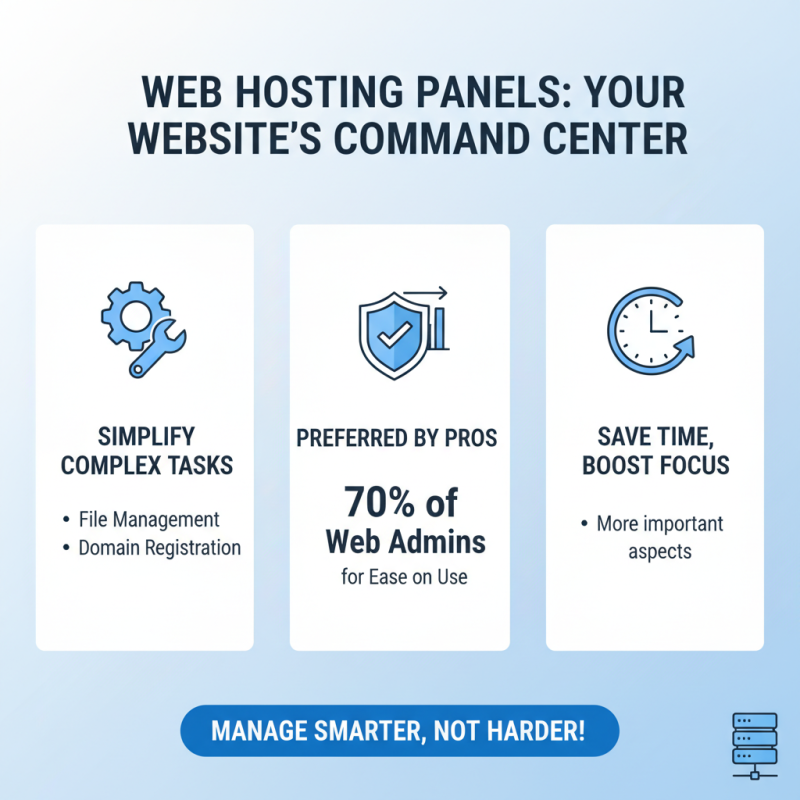
A hosting panel is a vital tool for managing websites effectively. It simplifies complex tasks such as file management and domain registration. Research shows that nearly 70% of web administrators prefer using hosting panels for their ease of use. They save time and allow users to focus on more important aspects of their websites.
When evaluating a hosting panel, consider its features. Essential functions often include database management, email setup, and backups. According to industry statistics, 80% of users reported faster site changes with an intuitive panel. This translates into better user experiences and higher engagement rates.
Tips: Always choose a hosting panel that offers robust security features. Regularly back up your website to prevent data loss. Remember, functionality should not come at the expense of speed. An overloaded panel can slow down your entire workflow, leading to frustrations.
In summary, selecting the right hosting panel can significantly improve your website management. Evaluate your specific needs and choose wisely. The right tools can make all the difference in achieving online success.
Key Features of Hosting Panels for Effective Website Control
When managing a website, a hosting panel can simplify operations significantly. One key feature is the user-friendly interface, which allows even beginners to navigate with ease. Clear dashboards display server health, website statistics, and resource usage. With this instant information, users can make better decisions about upgrades or troubleshooting.
Another important aspect is the variety of tools provided. Many hosting panels include tools for managing domains, email accounts, and databases. These functionalities help streamline website management. Users can create email addresses linked to their domain with just a few clicks. However, not all panels offer the same level of customization. Some users might find certain features lacking or complicated, prompting them to search for alternatives.
Security features are also critical. A robust hosting panel typically includes SSL management and regular backups. But, users must remain vigilant. Even with these features, negligence can lead to vulnerabilities. Some panels may fail to notify users of security updates. This can be a significant oversight, leaving websites exposed to threats. It's crucial for users to actively monitor and ensure their websites are secure.
Comparing Different Types of Hosting Panels Available in the Market
When managing a website, the choice of a hosting panel is crucial. Various options are available, each with unique features. Some are user-friendly, while others offer advanced functionalities. The right panel can make management smoother, but not all have the same learning curve. For instance, certain panels are intuitive for beginners, while others may confuse them.
Control panels like those focused on simplicity cater to users without technical backgrounds. They often provide drag-and-drop interfaces, making tasks straightforward. On the other hand, more advanced panels provide enhanced customization and flexibility for experienced users. However, they might present a steep learning curve. This discrepancy can lead to frustration for those who want quick results.
When considering hosting panels, features like security and scalability are essential. Some panels prioritize native security options, while others rely on third-party integrations. Understanding these details is vital for the long-term health of a website. Reflecting on one’s needs will assist in finding the right fit, but it’s important to remember that no panel is perfect. Each has its strengths and weaknesses.
Benefits of Using a Hosting Panel for Website Performance Optimization
Choosing a hosting panel can significantly boost your website's performance. A good panel simplifies server management, making complex tasks easier. With intuitive interfaces, tasks like software updates and website backups become quick and straightforward. Users enjoy a seamless experience while managing databases and files.
Performance optimization is vital for any website. Hosting panels come equipped with features designed for this purpose. They can help you optimize your website's loading speed. This is crucial in retaining visitors. A slow site often leads to high bounce rates. Users expect instant responses. Configuration options allow you to adjust settings for better performance.
Yet, some panels may not meet all needs. It's essential to evaluate features carefully. Overly complicated systems can lead to confusion. Not every user will require advanced functionalities. A panel that fits your skills and requirements is essential. Finding that balance takes time and effort. Always reassess your choice as your website grows.
How to Choose the Right Hosting Panel for Your Specific Needs
When choosing a hosting panel, consider your unique needs. Different users have different requirements. Some may require advanced features, while others might prefer simplicity. Assess what you need before making a choice.
Tips: List your priorities. Do you need easy site management? Or do you want robust security features? Understanding your focus will help narrow down options.
Look for user-friendly interfaces. A complicated dashboard can lead to errors. If you find it hard to navigate, it may not be the right fit. Test software demos when possible.
Tips: Take notes on what works and what doesn’t. Identify pain points during the trial. This will guide your decision-making.
Consider scalability. Your needs may change over time. Choosing a panel that grows with your website can save you hassle later. Review user feedback for insights on growth capability.
Tips: Reach out to existing users if possible. Their experiences can reveal strengths and weaknesses. A single negative review can provide valuable lessons.

 Overwhelmed? We're here to help.