How to Choose the Best Monthly Hosting for Your Website?
Choosing the right monthly hosting for your website is crucial. In 2023, more than 30% of websites rely on shared hosting plans. This highlights the importance of finding a service that meets your specific needs. Many businesses face challenges with speed, uptime, and support.
A recent report indicated that 47% of consumers expect a web page to load in under two seconds. Slow-loading sites can hurt user experience and conversion rates. It’s essential to consider these factors when evaluating monthly hosting options.
Moreover, many hosting providers often advertise unlimited bandwidth or storage. However, it's wise to dig deeper. Many customers later face restrictions. Reflecting on these details can guide you to a robust hosting choice. Prioritizing speed and reliability will ultimately enhance your online presence.
Understanding Your Website Needs for Monthly Hosting
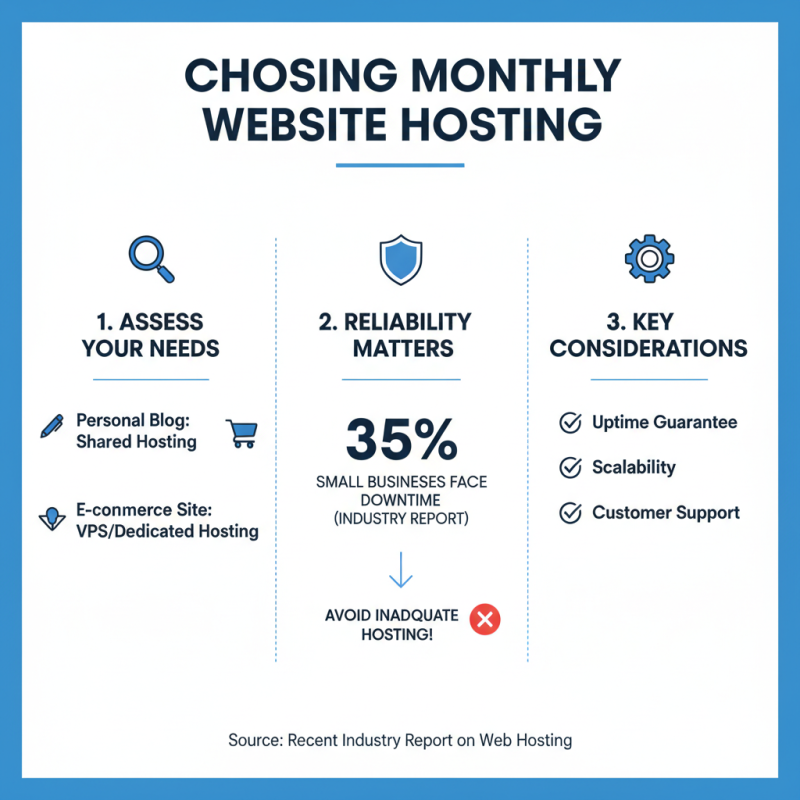
Choosing the right monthly hosting for your website hinges on understanding its specific needs. Host everything from a personal blog to an e-commerce site. Each type requires different resources. According to a recent industry report, around 35% of small businesses experience downtime due to inadequate hosting. This highlights the importance of reliable service.
When evaluating options, consider website performance needs. Will your site handle high traffic? Data shows that 70% of users abandon a website if it takes more than three seconds to load. Therefore, prioritizing speed and uptime is critical. A good rule of thumb is to look for a host that guarantees 99.9% uptime.
Tips: Start by assessing your website's current traffic and future growth. Analyze your content types; images and videos consume more bandwidth. Ensure your hosting plan offers enough scalability to avoid future issues. Keep your budget in mind, but remember that the cheapest option may not be the best. Quality hosting could enhance your site’s performance significantly.
Comparing Different Types of Hosting Services
When choosing a hosting service, understanding the different types is crucial. Shared hosting, VPS, and dedicated servers cater to varied needs. According to recent studies, around 70% of websites start with shared hosting due to its affordability and ease. However, users often hit limits on resource performance as their sites grow.
VPS hosting offers a balance between price and power. It allows for more resources and control than shared hosting. It's perfect for sites with increasing traffic yet can be a bit tricky for beginners. A survey shows that 45% of small business owners query whether VPS meets their needs.
**Tip:** Evaluate your website’s traffic patterns. If you anticipate growth, consider VPS even early on.
Dedicated servers are for high-demand sites needing maximum resources. They come with higher costs and complexity. Businesses should weigh if this is necessary or if a scalable solution is better. Inefficient allocation of resources can lead to wasted costs.
**Tip:** Always do a cost-benefit analysis. Sometimes, growing into a plan saves money long-term.
Evaluating Performance and Reliability of Hosting Providers
When selecting a hosting provider, performance and reliability are crucial factors. Assessing speed is paramount. A slow loading website can turn visitors away. Aim for providers that guarantee high uptime rates. Look for claims of 99.9% uptime or better. However, remember that these are often just promises. Investigate user reviews and expert opinions. Real-world experiences can shed light on a provider's consistency.
Another aspect to consider is customer support. A responsive team can make a difference when issues arise. Check if they offer 24/7 support through multiple channels. Some may only provide email support during business hours. This can be frustrating when immediate assistance is needed. Additionally, analyze the provider's performance history. How do they handle traffic spikes or downtime? A reliable provider should have a plan in place. Ignoring these details can lead to regret later on. Balancing performance with cost is essential for a successful website launch.
How to Choose the Best Monthly Hosting for Your Website?
| Hosting Provider Type |
Monthly Cost |
Performance (Speed) |
Uptime Percentage |
Customer Support Rating |
| Shared Hosting |
$5.99 |
1.5s |
99.9% |
4.2/5 |
| VPS Hosting |
$19.99 |
800ms |
99.95% |
4.5/5 |
| Dedicated Hosting |
$79.99 |
200ms |
99.98% |
4.8/5 |
| Cloud Hosting |
$29.99 |
600ms |
99.9% |
4.6/5 |
Assessing Customer Support and Service Options
Choosing the right monthly hosting is crucial for your website's success. One of the key factors in this decision is customer support and service options. A recent survey by a leading industry research firm found that 70% of users prioritize support quality when selecting a hosting provider. This statistic emphasizes the need for responsive and knowledgeable assistance.
When evaluating support options, look closely at response times. Studies show that hosting services with live chat support respond within an average of two minutes. In contrast, those relying solely on email often take up to 24 hours. Quick responses can save you from extended downtime and potential revenue loss. Additionally, consider the availability of support channels. Options like phone, chat, and ticket systems can cater to different needs.
Reflecting on customer feedback is also essential. Some hosting providers claim to offer 24/7 support, but many users report long wait times during peak hours. This inconsistency raises questions about the reliability of their service. By scrutinizing support reviews and ratings, you can make a more informed choice. Remember, effective customer support is not just a luxury; it's a vital component of your website's ongoing performance.
Monthly Hosting Customer Support Ratings
Considering Pricing Structures and Renewal Fees in Hosting Plans
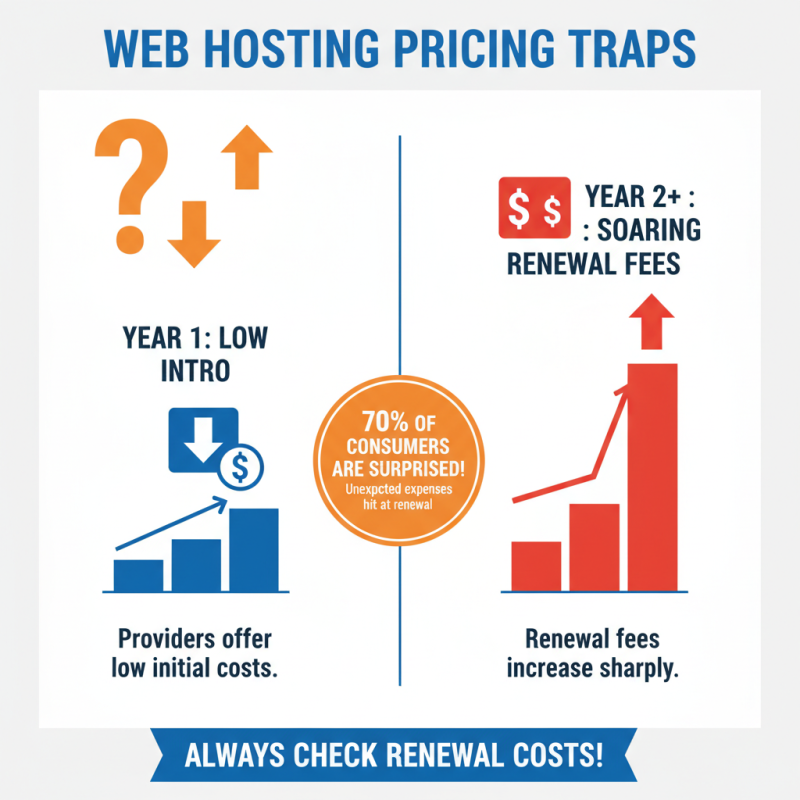
When you're choosing a hosting plan, pricing structures are crucial. Many hosting providers offer low introductory rates. However, renewal fees often skyrocket after the first year. According to industry reports, 70% of consumers are surprised by renewal costs. This can lead to unexpected expenses when your contract renews.
Examine the details of each plan. Look for hidden fees. Some providers charge for backups, restores, and even extra storage. A study showed that 40% of users faced additional charges for services they assumed were included. These costs can add up quickly.
A cheaper initial rate may not save you money in the long run. Ensure you calculate the total cost over multiple years. Find plans with transparent pricing. Look for those with reasonable renewal rates. Often, what looks like a bargain may become a financial burden later. Awareness of these factors can lead to better choices.

 Overwhelmed? We're here to help.