How to Choose the Best Hosting Servers for Your Website?
Choosing the right hosting servers for your website is crucial. According to renowned web hosting expert, Sarah Johnson, “Selecting the right server can make or break your online presence.” A reliable hosting server provides the foundation for a seamless user experience. This choice impacts your site's performance, speed, and security.
Many users overlook essential factors in their selection process. They often focus on price without considering reliability. This can lead to frustrating downtime and slow load times. A good hosting server should offer both affordability and quality. It's not just about saving money but investing wisely in your online success.
When choosing hosting servers, consider your website's specific needs. A small blog may require less power than a large e-commerce site. Don't rush this decision. Analyze and reflect on what features matter most, such as customer support and scalability. Finding the best hosting servers for your website takes time and careful thought.

Understanding Different Types of Hosting Servers Available
When selecting the right hosting server for your website, it’s crucial to understand the various options available. Shared hosting is budget-friendly. Many websites share the same server resources, which can lead to slow performance. It’s suitable for small sites but often lacks reliability.
Virtual Private Server (VPS) hosting offers a middle ground. Users still share a server, but each has dedicated resources. This improves performance and security. However, managing a VPS can be complex. It requires technical knowledge that many users may not possess.
Dedicated servers provide maximum power and control. You have an entire server to yourself, which is great for high-traffic sites. But, they come with a high cost. Plus, maintenance can be overwhelming for those without expertise. Finally, cloud hosting is versatile and scalable. Resources can increase as needed, but it can be challenging to predict costs. Each option has its pros and cons. Choosing requires careful consideration of your needs.
Key Factors to Consider When Choosing a Hosting Server
Choosing the best hosting server for your website requires careful consideration. There are several key factors to keep in mind. One essential aspect is reliability. A report from HostingAdvice states that 99.9% uptime is crucial for any website. Downtime can mean lost revenue and diminished user trust.
Another important factor is speed. Studies show that 40% of visitors abandon a site that takes more than three seconds to load. Investing in a server with optimal loading times can enhance user experience significantly. An ideal server should ensure fast content delivery around the globe.
Tips: Look for servers that offer a content delivery network (CDN). This can greatly improve response times for users far from the main server location.
Security also deserves attention. Cybersecurity threats are rising. A report by Cybersecurity Ventures predicts that global cybercrime costs will reach $10.5 trillion by 2025. Choose a server that offers SSL certificates and regular backups. These features can prevent data breaches and ensure continuity.
Tips: Always review the security measures of a hosting provider. If they are vague or lack features, consider alternatives.
Lastly, scalability is vital. Your website may grow, and your server should accommodate that growth. Many hosting services offer plans that can be upgraded easily. If a server lacks scalable options, it might not be the right choice. Planning for future needs can save headaches later on.
How to Choose the Best Hosting Servers for Your Website?
This chart illustrates the key factors to consider when choosing a hosting server for your website, based on different attributes that affect performance and reliability.
Evaluating Performance Metrics for Hosting Servers
When evaluating performance metrics for hosting servers, speed is crucial. A slow server can frustrate visitors and lead to higher bounce rates. Aim for a server with low latency and high-speed connectivity. Test loading times with online tools. Aim for under three seconds for optimal performance.
Consider uptime reliability. A server that frequently crashes or experiences downtime affects your reputation. Look for options that guarantee a minimum of 99.9% uptime. This ensures your site remains accessible. Regularly check uptime records to gauge effectiveness.
**Tip:** Monitor server response times regularly. This keeps you informed about your server's health.
Storage capacity matters too. Make sure it meets your website's needs. If your site has heavy traffic, you might require scalable options. Don’t hesitate to switch if your current server falls short. Performance is often fluid and requires adjustment.
**Tip:** Document any performance issues you encounter. This will help you make informed decisions.
How to Choose the Best Hosting Servers for Your Website? - Evaluating Performance Metrics for Hosting Servers
| Hosting Type |
Uptime (%) |
Load Time (Seconds) |
Support Response Time (Minutes) |
Scalability |
| Shared Hosting |
99.5% |
2.5 |
30 |
Limited |
| VPS Hosting |
99.9% |
1.2 |
15 |
Moderate |
| Dedicated Hosting |
99.99% |
0.8 |
10 |
High |
| Cloud Hosting |
99.95% |
1.0 |
20 |
Very High |
| Managed WordPress Hosting |
99.9% |
1.5 |
25 |
Good |
Comparing Pricing Models and Value for Your Needs
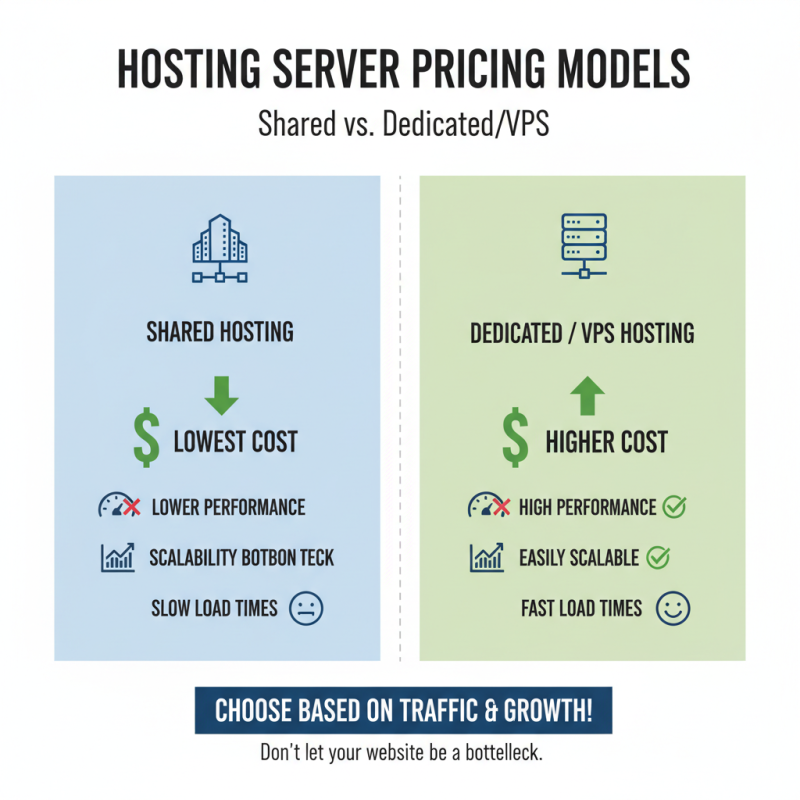
When selecting hosting servers, pricing models play a crucial role. Shared hosting often appears to be the most affordable option. However, it may not offer the performance you need. Consider how many visitors you expect. If your website grows, shared hosting can become a bottleneck. You might face slower load times. This can frustrate visitors.
VPS and dedicated hosting provide more resources. Their costs can be higher. Yet, they often include better security and speed assurances. This investment could pay off with improved user experience. Cost isn’t just about the monthly fee; it’s about value in the long run. Analyze your requirements carefully to find the best fit. Don’t overlook hidden fees that some providers advertise.
Assess your budget, but also think about long-term needs. You may find that a slightly pricier option offers significant advantages. For instance, quality customer support can save you time. Time is money, especially if something goes wrong. Finding the right balance between cost and value is essential.

 Overwhelmed? We're here to help.