2026 How to Choose the Best Storage Dedicated Servers for Your Business?
Choosing the right storage dedicated servers is crucial for any business. In 2026, the demand for efficient data management has skyrocketed. Companies now rely heavily on data. A poor choice can lead to data loss and security issues.
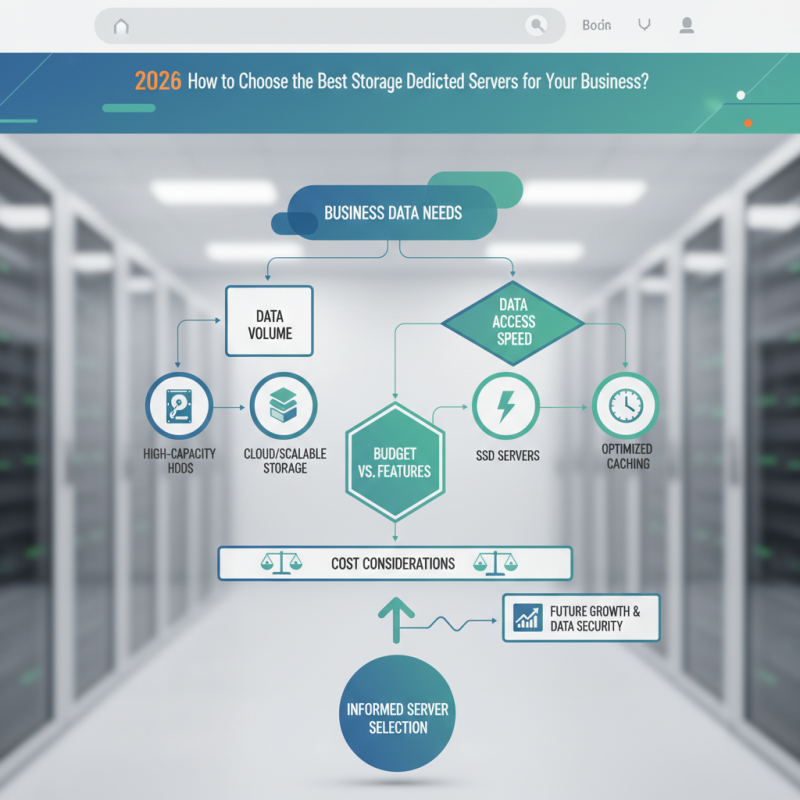
When selecting storage dedicated servers, consider your specific needs. Are you storing vast amounts of data? Look for high-capacity options. Do you need faster access times? Choose servers with SSDs. Many businesses overlook these details, which can prove costly in the long run.
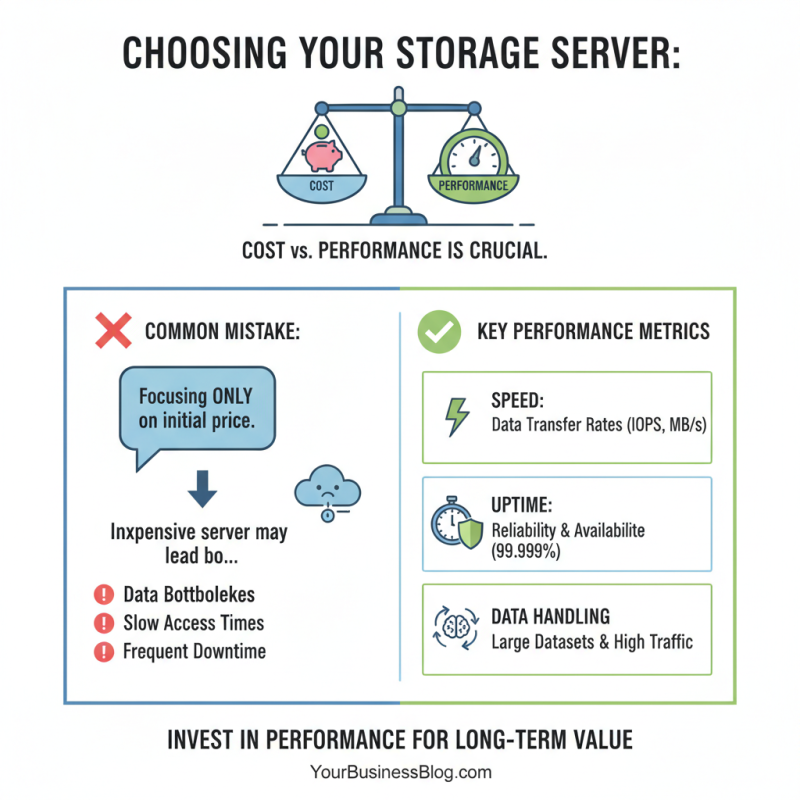
Cost is another important factor. While high-end servers offer advanced features, they may strain your budget. Finding a balance is key. In this ever-evolving landscape, make informed decisions. A thoughtful approach to storage dedicated servers will pave the way for future growth.
How to Evaluate the Storage Needs of Your Business in 2026
Evaluating the storage needs of your business in 2026 requires a keen understanding of your data. Consider the type and volume of data generated. For instance, a tech startup may require high-speed access to large datasets. Meanwhile, a retail business may focus more on customer transaction records and inventory management.
Analyze current storage usage. Look for patterns. Are there times when storage spikes? What data is frequently accessed? This insight is crucial. It can reveal if your current setup meets demands. Furthermore, evaluate data growth projections. Will your data double in size over the next few years? If the answer is yes, then planning for scalable storage is vital.
Don’t forget to think about budget constraints. Balancing cost with performance is often tricky. It may be necessary to compromise on speed or capacity. Ask: How much can you afford? Sometimes, what seems like a good choice may not fit your actual needs. A careful assessment will guide you to align your storage options with realistic business goals.
Storage Needs Evaluation for Businesses in 2026
Key Features to Consider When Selecting Dedicated Storage Servers
When selecting a dedicated storage server for your business, there are key features to consider. Understanding the storage capacity is crucial. Determine how much data you need to store now and in the future.
Scalability is essential. Can the server expand as your needs grow? These questions affect your choice.
Performance should also be a priority. Look for servers with fast read and write speeds. SSDs often outperform traditional hard drives. However, they may come at a higher cost. Weigh your budget against your performance needs. Evaluate your workload. Will your server handle multiple users accessing data simultaneously?
Redundancy is another critical feature. Opt for a server that has backup solutions. This protects your data from loss. Many businesses overlook this aspect, thinking it unlikely. Consider reliability ratings and user reviews to gauge performance over time. A long warranty may also indicate durability, but does it truly reflect value? Reflect on these details as you make your decision.
Comparing Storage Types: SSD vs HDD for Dedicated Servers
When choosing storage for dedicated servers,
SSDs and HDDs are the main options.
SSDs are known for speed. They can read and write data much faster than HDDs.
According to industry reports, SSDs can be up to 100 times faster than traditional hard drives. This speed is especially beneficial for applications requiring quick data access, such as databases and cloud services.
Despite the advantages, SSDs can be costly. A larger SSD capacity often comes with a significant price increase. For businesses with limited budgets,
HDDs offer a more economical choice. They provide ample storage at a lower cost per gigabyte. However, their slower performance may hinder efficiency.
Reports indicate that around 60% of businesses are still using HDDs, mainly for archival or less critical data.
It is essential to weigh the benefits against your business needs. If your operations demand speed, go for SSDs. But if budget constraints are an issue, HDDs remain a viable option.
The perfect choice depends on your specific use case.
Evaluate what data is essential and how quickly it needs to be accessed. Balancing performance and cost can be challenging but is crucial for optimal server performance.
The Impact of Data Security Standards on Your Storage Choices in 2026
Data security standards play a crucial role in selecting dedicated storage servers in 2026. As cyber threats evolve, businesses must prioritize security. They should consider encryption, access controls, and compliance requirements. The right storage solution not only protects data but also builds customer trust.
Many companies overlook the importance of continuous security assessments. It's not enough to implement security measures once. Regular reviews and updates are necessary. This ensures that security protocols adapt to new challenges. Moreover, investing in employee training can help identify vulnerabilities before they are exploited.
Selecting a server with robust security features can be a daunting task. Organizations might struggle to balance cost and security. A cheaper option may lack essential safeguards. Businesses need to reflect on their specific needs. Too often, decisions are made in haste, leading to inadequate protection. Evaluating long-term goals can provide clarity in this complex landscape.

 Overwhelmed? We're here to help.